
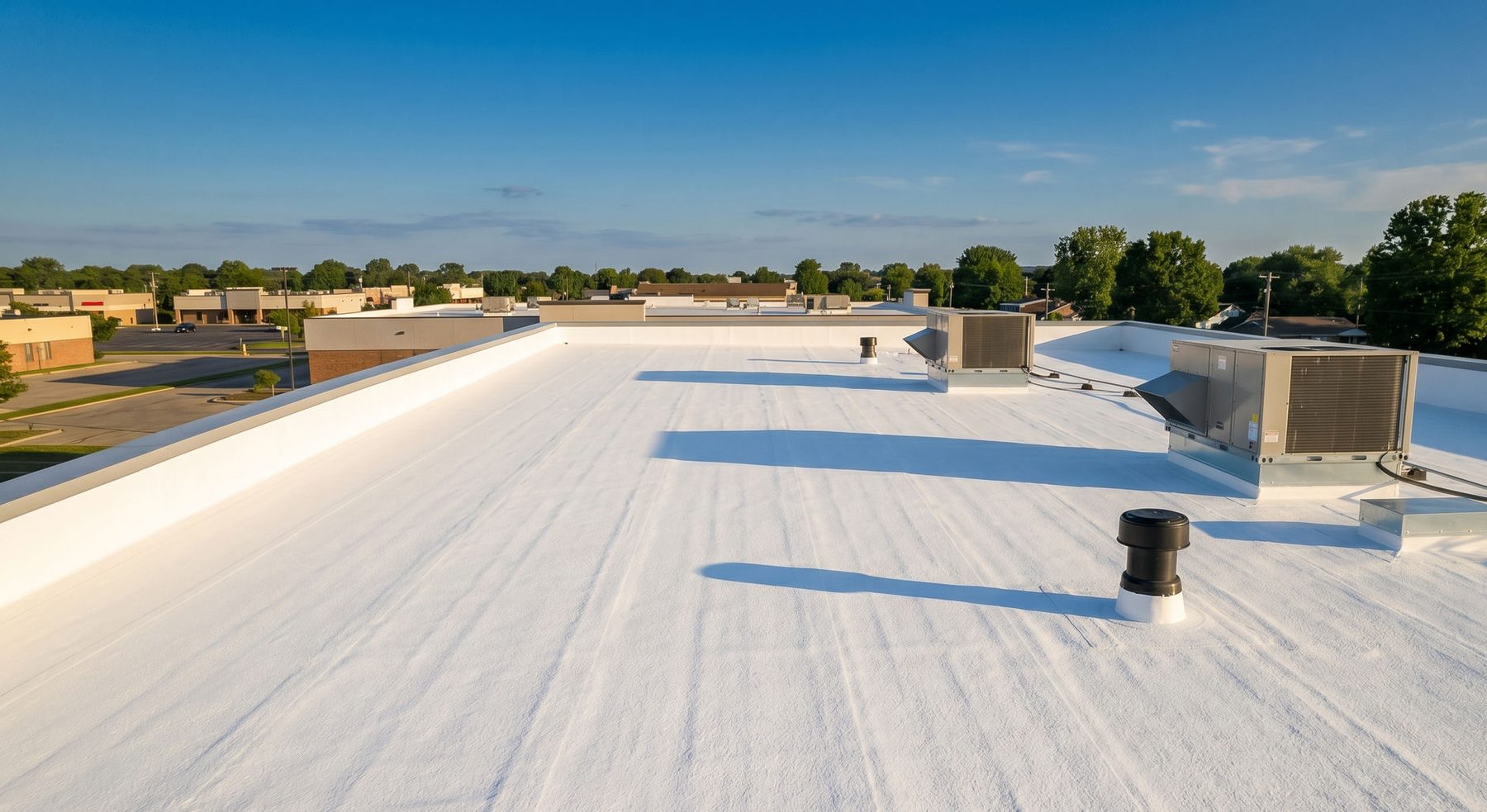
Commercial systems built to last
We specialize in two commercial roofing systems that we know inside and out: TPO membrane and silicone-finished spray foam. Both are proven, long-lasting solutions for flat and low-slope commercial roofs — and we install them right the first time.
TPO Membrane Roofing
Thermoplastic Polyolefin (TPO) is the most widely installed commercial roofing membrane in the country — and for good reason. It’s durable, energy-efficient, and highly resistant to the heat and UV exposure that Georgia dishes out year-round.
Why TPO?
- White reflective surface significantly reduces cooling costs
- Heat-welded seams are stronger than the membrane itself
- Resistant to UV, ozone, and chemical exposure
- Flexible — handles building movement without cracking
- Available in multiple thicknesses (45, 60, 80 mil)
- Strong manufacturer warranty options
- Widely accepted by insurance carriers
Installation Methods
We match the installation method to the building and substrate:
Mechanically attached
screwed and plated through insulation to the deck; the standard for most commercial applications
Fully adhered
bonded directly to the substrate with commercial adhesive; superior wind uplift resistance for exposed or high-profile buildings
Recover systems
TPO installed over existing membrane to extend roof life without full tear-off
Silicone-Finished Spray Foam Roofing
Spray polyurethane foam (SPF) with a silicone topcoat is one of the most effective commercial roofing systems available — and one of the most underutilized. It installs over existing roofs, eliminates seams entirely, and can be recoated indefinitely.
How It Works
Closed-cell polyurethane foam is sprayed directly onto the existing roof surface, expanding to fill every seam, crack, and penetration. Once cured, a silicone elastomeric coating is applied over the entire surface — creating a seamless, waterproof, UV-stable membrane.
- No seams — the most common failure point in any roofing system
- Self-flashing around penetrations, curbs, and equipment
- Adds R-value — typically R-6 per inch of foam
- Installs over most existing roofing without tear-off
- Silicone topcoat is inherently UV-stable — won’t chalk or crack
Long-Term Value
The silicone coating can be reapplied every 10–15 years to restore the warranty and extend the system’s life indefinitely. You never need to tear off a foam roof — you just recoat it.
- Indefinitely renewable — recoat to restore warranty
- No landfill cost — no tear-off required for maintenance
- Reflective white surface reduces cooling loads significantly
- Excellent for irregular roofs with lots of penetrations
- Strong resistance to ponding water — silicone doesn’t degrade in standing water
Both systems qualify for LEED credit
TPO and silicone-finished spray foam are reflective, energy-efficient systems that can qualify for LEED credit — and valuable energy-efficiency tax incentives for commercial property owners. Ask us how it could apply to your building.
Explore LEED creditsTPO vs. Silicone Foam — Which is Right for Your Building?
Both systems are excellent. The right choice depends on your existing roof, building type, and goals.
Choose TPO If…
- You’re starting from bare deck or doing a full tear-off
- The building has a large, simple, flat roof area
- You a strong manufacturer-backed warranty
- Budget is a primary consideration
- The roof has good drainage and minimal ponding
Choose Silicone coated SPF system If…
- You want to install over the existing roof without tear-off
- The roof has lots of penetrations, curbs, or HVAC equipment
- Ponding water is a recurring issue
- Adding insulation value at the same time is a goal
- You want a “forever” system that can be recoated
Not sure which is right for your building? We’ll come out, assess your existing roof condition, and give you a recommendation with a quote for both options so you can make an informed decision.
Ready to Talk About Your Commercial Roof?
We serve commercial properties throughout the CSRA. Get a free assessment and quote — we’ll give you a straight answer on what your building needs.