
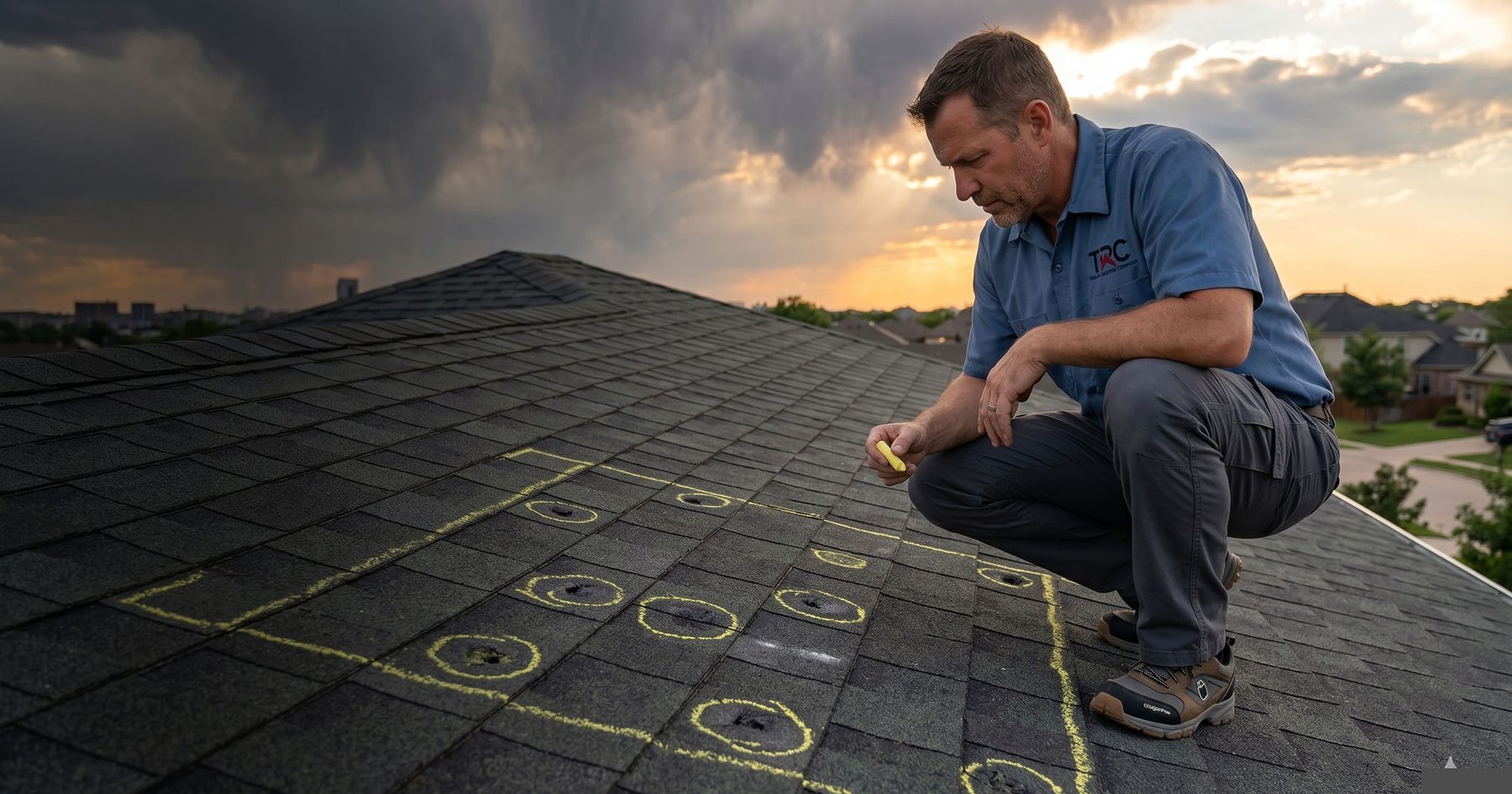
Storm & Hail Damage documented right
Hail hits, wind lifts, trees fall. We get on the roof fast and document every bit of damage so your inspection is complete and accurate.
We catch what a quick look misses.
After a storm, the clock matters. The sooner we’re on your roof, the more complete the documentation — and the stronger your claim. We move fast across the CSRA and photograph everything before your adjuster ever arrives.
Not all storm damage is obvious from the ground. Hail bruising, hairline shingle creases, and lifted flashing are easy to miss — and easy for an inspection to overlook. We don’t.
We catch what a quick look misses
One contractor, the whole job — documented for your insurance claim where it applies, and installed to last.
- Hail bruising & granule loss — the damage that shortens a roof’s life
- Lifted & creased shingles — from high wind and uplift
- Flashing, vents & soft metals — where leaks usually start
- Gutters & downspouts — dented or detached by hail and debris
What you can count on
Fast Response
We mobilize quickly after a storm so nothing gets missed or weathered over.
Full Documentation
Every bit of damage photographed and logged before the adjuster arrives.
Inspection-Ready
A clear, complete record that makes your adjuster’s job — and your claim — easier.
Need storm & hail damage? Start with a free inspection.
We’ll take a look, tell you honestly what we find, explain the options, and offer you a fair quote for repair or replacement.